


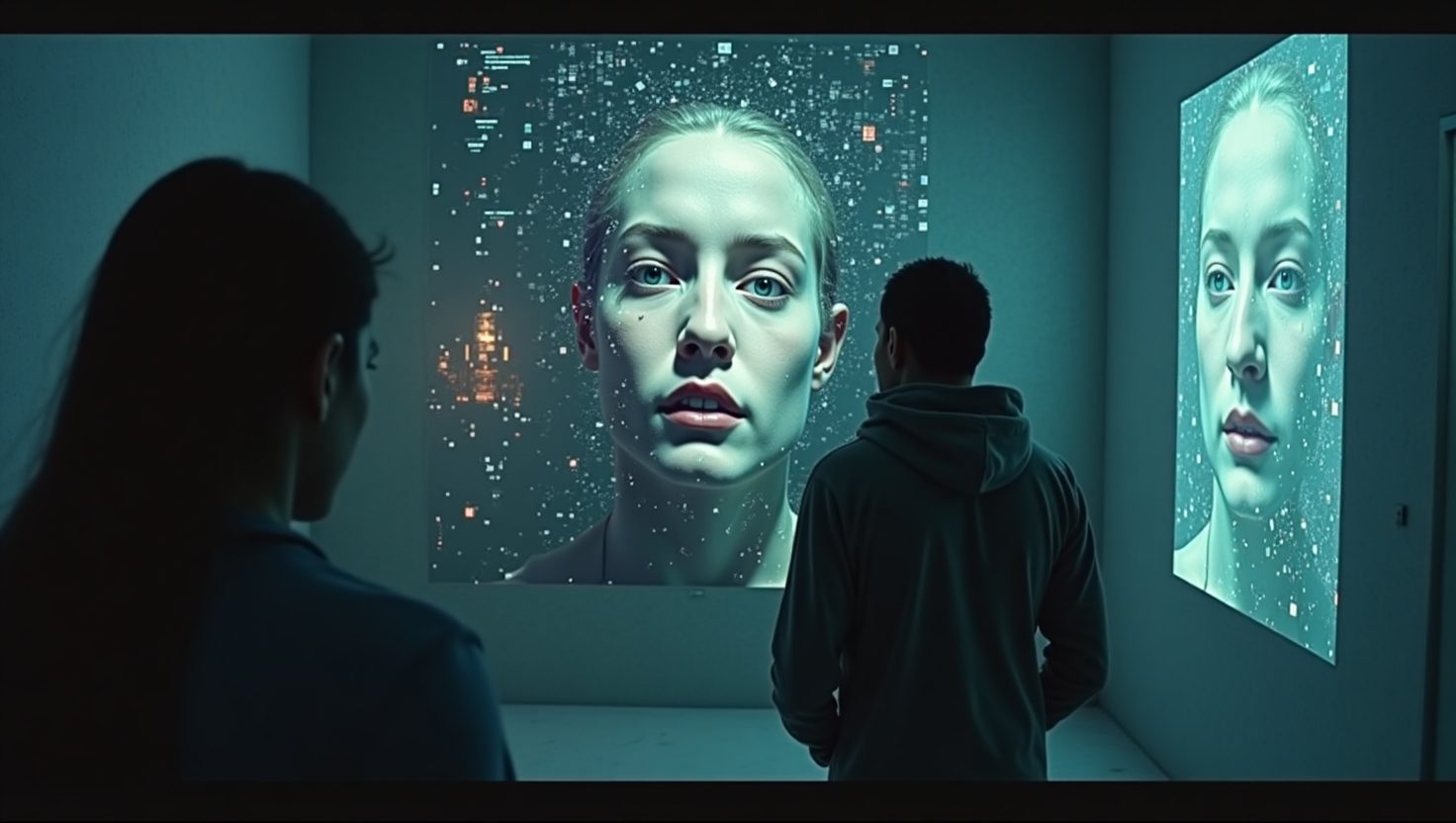
The Ghost in the Machine is Now Wearing Your Face
So what exactly is this AI identity crisis? It’s not just about a dodgy “deepfake” of a politician saying something daft. Think bigger. It’s the core philosophical and technical problem of our age: in a world awash with synthetic media, how do we prove that you are you? And, perhaps more unsettlingly, who owns the version of you that isn’t you at all? Your identity is becoming a currency, and the counterfeiters—powered by sophisticated AI models—are building printing presses in the cloud. Suddenly, the value of your authentic self is on the verge of a catastrophic collapse.
This isn’t some far-off sci-fi scenario. As a recent report in Wired highlights, OpenAI is already beta-testing a TikTok-style app in the US that uses its much-vaunted Sora model. Users can create videos with digital avatars of themselves, or anyone else, complete with AI-generated audio. The app politely informs you that “Some videos may depict people you recognise, but the actions and events shown are not real.” That’s a bit like a bank robber leaving a note saying, “The money taken was not real.” It doesn’t solve the fundamental problem, does it? The genie isn’t just out of the bottle; it’s directing, producing, and starring in its own feature film using your face as the lead. This is where the conversation around synthetic media ethics moves from academic debate to a five-alarm fire in your digital life.
The Unbearable Weight of Being Synthetic
The rise of these platforms forces a new strategic necessity onto the internet: avatar authentication. For decades, we’ve relied on flimsy proxies for trust—a blue tick, a verified email, a green padlock in the browser bar. These are now utterly insufficient. How do you verify that the digital avatar giving financial advice on YouTube is a real, qualified human and not a synthetic puppet programmed to pump a worthless stock? How does a company know the person they just interviewed over a video call is even a person at all?
This isn’t a bug; it’s a feature of this new ecosystem. The incentive for platforms is to generate engagement, and synthetic media is engagement catnip. OpenAI’s Sora app, for example, is built around this very idea. Sam Altman himself boasted in a blog post about how the team “worked very hard on character consistency,” meaning your synthetic twin won’t suddenly change its haircut mid-video. How thoughtful. Yet, according to that same Wired article, the app’s safety filters are already proving inconsistent. While it might block a user from creating a video of Taylor Swift endorsing a political candidate, it happily generated videos featuring recognisable figures like Sam Altman himself or even fictional characters like Pokémon. This inconsistency reveals the core challenge:
* Moderation at Scale is Almost Impossible: How do you review billions of pieces of synthetic media for subtle misrepresentations or impersonations?
The Line is Blurry: Where does creative parody (think South Park*) end and malicious impersonation begin? The platforms don’t have an answer, and they’re hoping you won’t ask too many questions.
Who Owns the Copyright on You?
This mess inevitably leads us into a legal minefield. If I use an AI model to create a video of my friend—a digital marionette dancing to my prompts—who owns that video? Is it me, the prompter? Is it my friend, whose likeness was used? Or is it OpenAI, whose model did the heavy lifting? The current legal framework for copyright is about as prepared for this as a cavalry charge is for a tank battle. The very concept of personal AI copyrights is something lawyers are just beginning to grapple with.
The Wall Street Journal has reported on potential “copyright opt-out” systems for rights holders, but that places the burden of proof entirely on the individual. It suggests you will have to constantly patrol the internet, filing takedown notices for every synthetic version of yourself you find. It’s a game of digital whack-a-mole you are guaranteed to lose. A more robust solution might need to look like a form of digital rights management (DRM) for our own biometric data—a secure, verifiable way to licence our own likeness. But are we really ready for a world where we have to read the terms and conditions before letting a friend take a picture of us?
The future of identity is becoming a battleground between individual autonomy and platform power. Companies like OpenAI and Meta are building the playgrounds, and the price of admission might just be the deed to your digital self. They are normalising deepfake technology as simple entertainment, a fun filter, while the second-order effects—the erosion of trust, the potential for mass manipulation, the sheer addictive nature of it all—are treated as someone else’s problem.
As we stand at this crossroads, the questions we need to ask are fundamental. What part of our identity is truly ours if it can be perfectly replicated and manipulated by an algorithm? And as we race to build these incredible new technologies, have we spent even a fraction of that time considering the kind of world we are building in the process?
What are your thoughts on protecting our digital selves? Are you prepared to manage the copyrights on your own face?

